A lot of people do not think about visiting the dentist till they start feeing pain. Sadly, the first and easiest stages of the problem would have been missed by the time a toothache or swollen gums occur. With the advances of artificial intelligence (AI), 3D imaging and advanced diagnostic tools, dentists are able to diagnose numerous oral health concerns earlier than ever.
Rather than waiting until there have been issues to deal with, modern dentistry aims to catch any potential problem earlier on, so that patients can protect their smiles. The newly developed AI-powered diagnostic tools are proving to be very promising in helping early detection of oral diseases alongside clinical assessment.
What Is Preventive Dental Care?
The focus of preventive dental care is to keep teeth and gums healthy to decrease the chance of dental disease. Preventive care emphasizes early detection, regular monitoring and healthy lifestyle choices, as opposed to waiting for symptoms to develop.
An effective preventive strategy usually includes:
- Routine oral checkups
- Professional cleaning
- Digital imaging
- Screening for oral cancer
- Fluoride application
- Sealants
- Education
- Personalized advice on home care
Currently, all these procedures have become much more accurate and individualized due to digital technology use than ever before.
How AI is Revolutionizing Preventive Dentistry
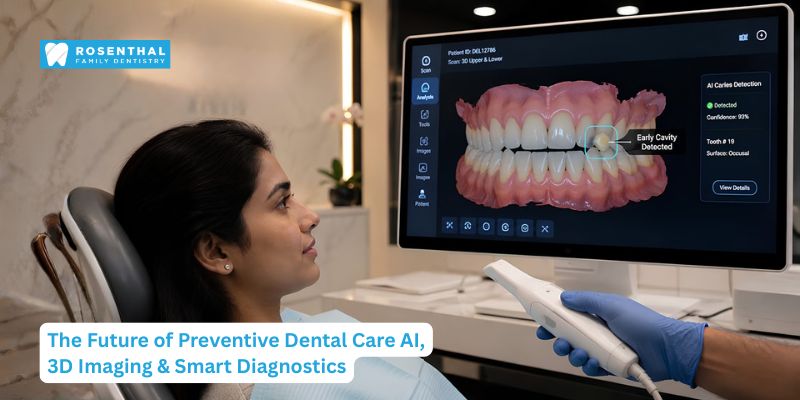
Artificial Intelligence does not substitute dentists, yet it can process digital imaging and other data about the patient to help detect some minor changes unnoticed by a dentist.
AI can help dentists by pointing out:
- Early tooth decay
- Periodontal Disease – which is linked to bone loss.
- Restorations in place that may need to be monitored
- Areas where there is wear or damage
- Any abnormalities that may occur in the future
These insights are valuable to the dentist in making decisions about their patient’s clinical care and for enhanced communication with the patient.
1. Earlier Detection Means Less Invasive Treatment
The best benefit of AI-supported diagnosis is detecting things early. The early detection of small cavities, minor gum inflammation and subtle changes in bone structure are more easily and less costly to treat.
Early diagnosis can prevent patients from having to experience:
- Large fillings
- Root canal therapy
- Tooth extractions
- Advanced periodontal treatment
- Costly restorative procedures
Preventive care is more effective if problems are detected before they start being painful.
2. The Power of 3D Dental Imaging
While traditional dental X-rays are important diagnostics, today’s imaging technology provides even more details. Cone Beam Computed Tomography (CBCT) or 3D imaging is a very detailed three-dimensional x-ray that provides a view of the teeth, bone, nerves and surrounding structures.
3D imaging is different from traditional x-ray because traditional x-rays only provide the dentists with a means of viewing the dental structure from one perspective only.
Such tools can be very helpful in:
- Dental implant planning
- Assessment of wisdom teeth
- Root canal assessment
- Jaw bone analysis
- Planning complicated treatments
The application of CBCT and digital imaging continues to increase and makes diagnosis and treatment planning easier.
3. Smart Diagnostics Enhance Accuracy
In this increasingly technologically advanced world, dentists are using a variety of smart diagnostic tools in addition to conventional dental exams. These technologies can more efficiently collect and analyze information, enabling dentists to make more accurate diagnoses of potential problems.
Smart diagnostics can be as follows:
- AI-assisted image analysis
- Digital cavity detection
- Intraoral cameras
- Digital scanning
- Computer-assisted treatment planning
These technologies, combined, give a more comprehensive understanding of a patient’s oral health.
4. Digital Scanners Replace Traditional Impressions
Uncomfortable trays of impression material are a memory many patients have. In today’s day and age, many impressions are being eliminated in favor of a digital intraoral scanner. Dentists can produce very accurate 3D digital records of teeth within minutes, with a handheld scanner.
Benefits include:
- Greater patient comfort
- Improved accuracy
- Faster treatment planning
- Better-fitting restorations
- Improved ease of communication with dental labs
Digital scans enable patients to view their very own teeth on-screen, which helps to make therapy proposals easier to understand.
5. Personalized Preventive Care
Every patient is unique when it comes to his or her oral health. With the help of AI and digital technologies, preventive care plans can be more personalized, taking into account an individual’s risk factors.
Dentists may consider:
- Previous cavity history
- Gum health
- Bite alignment
- Age
- Existing dental work
- Oral hygiene habits
- Lifestyle factors
Preventive care is not a “one size fits all” plan, but can be customized for each patient.
6. Better Patient Education
Dentistry has always been a challenge in which it is hard to make the patient truly understand what is going inside their mouth. Talk is clearer with digitally captured images and AI-supported visuals.
Patients are able to see:
- High-resolution intraoral photos
- Digital X-rays
- 3D scans
- Highlighted areas of concern based on AI
The real sight of these images aids patients to know more about their diagnosis and the significance of the recommended treatment.
7. Monitoring Changes Over Time
Preventive care does not have to take place in one visit. With modern dental technology, dentists can easily compare and compare images and scans taken from past visits and pinpoint even minor changes over time.
This continuous monitoring can identify:
- Slowly developing cavities
- Progressive gum disease
- Tooth wear
- Bone changes
- Failing restorations
Monitoring these trends helps to prevent unanticipated long-term oral health outcomes and to intervene earlier.
What AI Cannot Replace
As AI propels dentistry to new heights of innovation, it cannot replace the expertise and discernment of an experienced dental expert.
Leveraging technology can help by:
- Analyzing images
- Flagging potential concerns
- Organizing clinical data
But dentists will still have responsibility for:
- Performing comprehensive examinations
- Confirming diagnoses
- Developing treatment plans
- Providing hands-on care
- Taking care of each patient’s individual needs
The more advanced technology is mixed with the experience of clinical skills, the better the results.
The Future of Your Smile Starts Today
Preventive dental care is evolving because of the advancements in AI, 3D imaging, and smart diagnostics, making it easier to identify issues before they start, enhancing diagnostics, and addressing treatment needs on a case-by-case basis. These technologies help create a healthier smile, more comfortable visits and fewer surprises down the road.
At Rosenthal Family Dentistry, we blend caring, professional treatment with state-of-the-art dental technology to keep our patients one step ahead of oral health issues. From routine cleanings to learning more about the latest in preventive care options, we want to help you maintain a healthy smile and help you stay that way for years to come.