I remember a friend once telling me, “I brush twice a day, so I should be good, right?” And honestly, that’s what most of us think. Brush, floss when we remember, maybe rinse with mouthwash, and call it a day.
But here’s the part that doesn’t get talked about enough. What you eat every single day plays just as big a role in your dental health as your toothbrush does.
Think about it this way. Your teeth and gums aren’t just sitting there doing nothing. They’re constantly being exposed to whatever you eat and drink. Some foods slowly wear them down, while others quietly help rebuild and protect them.
Once you start paying attention to that, things get a lot more interesting.
Why Food Matters More Than You Think
Your enamel, which is the outer layer of your teeth, is strong. But it’s not indestructible. It goes through a cycle of losing and gaining minerals throughout the day.
Sugary and acidic foods pull minerals out. Nutrient-rich foods help put them back.
The same goes for your gums. They rely on vitamins and minerals to stay firm, healthy, and resistant to inflammation.
So when your diet leans in the right direction, your mouth naturally stays in better shape. Not perfect, but definitely more protected.
Dairy Products That Support Strong Teeth
Let’s start with something simple. Dairy.
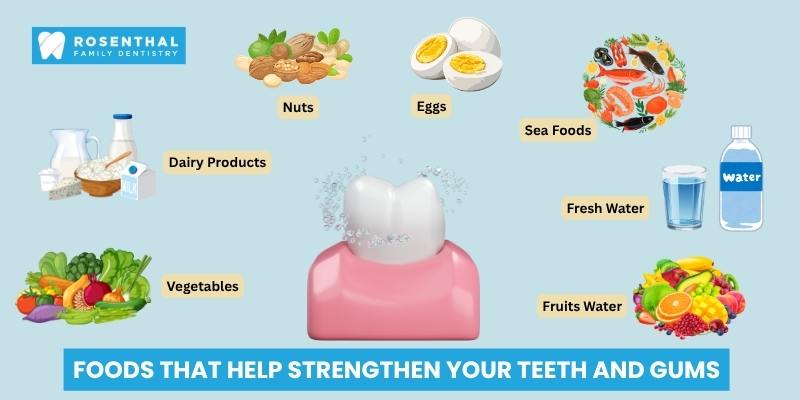
Based on personal experience and research, cheese, milk, and yogurt are some of the best foods that support the teeth. That is because they contain plenty of phosphorus and calcium that strengthen the enamel.
But there’s another benefit people don’t always realize. Cheese, especially, helps balance the pH level in your mouth. That means it reduces the acidic environment in which bacteria thrive.
So even something small like having a piece of cheese after a meal can actually help your teeth recover.
And if you’ve ever noticed how your mouth feels less “coated” after eating cheese, that’s part of what’s happening.
Crunchy Fruits and Vegetables
You’ve probably heard that apples are good for your teeth. That part’s true, but not for the reason most people think.
Crunchy fruits and vegetables like apples, carrots, and celery act almost like natural cleaners. They scrub the surface of your teeth as you chew them. They also help with the production of saliva.
And saliva is a big deal. It helps wash away food particles and neutralize acids.
It’s not a replacement for brushing, but it definitely supports what brushing is trying to do.
Plus, these foods are full of water and fiber, which makes them even more mouth-friendly.
Nuts and Seeds for Minerals and
Nuts are a type of food that I feel we don’t give enough credit to. They provide all-around benefits, including better dental health.
Seeds, walnuts, and almonds all contain plenty of magnesium and calcium that help support good enamel structure and maintain strong teeth.
They also tend to be low in sugar, making them a safer snack than processed options.
And since they require a bit of chewing, they also help stimulate saliva, just like crunchy vegetables do.
It’s one of those simple swaps that quietly adds up over time.
Fatty Fish and Vitamin D
This one often surprises people.
Foods like salmon and other fatty fish are high in vitamin D, which helps your body absorb calcium more effectively.
You can eat calcium-rich foods all day, but without enough vitamin D, your body won’t use it as efficiently.
So this is more of a support system. Vitamin D helps make sure the good stuff you’re eating actually benefits your teeth and bones.
And if fish isn’t your thing, even getting some sunlight helps your body produce vitamin D naturally.
Water Is More Powerful Than It Seems
This might sound basic, but water does a lot more than just keep you hydrated.
Drinking water helps rinse away leftover food particles and sugars. It also keeps your saliva levels where they should be.
Always having a dry mouth is a clear indication that saliva is not doing its job well. And that can increase the risk of tooth decay and gum issues.
So just regularly drinking water throughout the day is one of the easiest ways to support your oral health without even thinking about it too much.
Foods to Be Careful With
It’s not just about what to eat more of. It’s also about being aware of what can work against you.
Sugary snacks, sticky candies, and acidic drinks tend to weaken enamel over time. When they become everyday habits, they tip the balance in the wrong direction.
That doesn’t mean you have to avoid them completely. It just means being mindful of how often you have them and making sure they’re not constantly exposing your teeth.
Balance matters more than perfection here.
Small Changes That Actually Stick
Here’s the part that makes all of this easier. You don’t need to overhaul your entire diet overnight.
A few small changes can make a noticeable difference over time:
- Add a crunchy fruit or vegetable to your daily routine
- Swap one sugary snack for nuts or cheese
- Drink more water between meals
- Include leafy greens in at least one meal a day
- Be mindful of how often you sip on sugary drinks
These aren’t big changes, but they’re realistic. And that’s what makes them stick.
Final Thoughts
Taking care of your teeth isn’t just about what happens in front of the mirror with a toothbrush. It’s also about what’s happening at the table every day.
Some foods slowly wear your teeth down. Others help rebuild, protect, and strengthen them.
Once you start thinking about food as part of your oral care routine, everything connects a little better.
And the best part is, most of the foods that support your teeth are the same ones that support your overall health. So you’re not just helping your smile. You’re helping your whole body at the same time.